Forgotten histories: what fetal and baby remains in medical collections tell us about inequality
Read coverage of our new research here in The Conversation.

Read coverage of our new research here in The Conversation.


A reminder that the 13th Annual SSCIP Conference is being held via Zoom from the 25th to 28th of October (British Summer Time). It is hosted and organised by Associate Professor Siân Halcrow of the University of Otago, New Zealand, and has been scheduled into eight short sessions over four days to accommodate the different time zones of participants.
Keynote addresses will be made by Professor Maureen Carroll of the University of York, Associate Professor Alison Behie of Australian National University, Professor Holly Dunsworth of the University of Rhode Island, and Professor Sarah Knott of Indiana University Bloomington.
If you are interested in attending any of the eight sessions you can register for free using the following link: https://www.eventbrite.com/e/society-for-the-study-of-childhood-in-the-past-conference-tickets-179748280947. After you register you will be sent a confirmation email. Zoom details for the event can be found by clicking the “View the event” button in this email.
Information regarding the conference schedule and abstracts for all the talks can be found at the following link: https://docs.google.com/document/d/1TqiAhXRo9NEiHPqTD1_OxOgh-wxf4dt0_jcIHQaWG2Y/edit?usp=sharing
Session times:
Day One / 25th October 2021 – Session One: 8am – 10am BST
Day One / 25th October 2021 – Session Two: 9pm – 10pm BST
Day Two / 26th October 2021 – Session One: 8am – 10am BST
Day Two / 26th October 2021 – Session Two: 9pm – 10pm BST
Day Three / 27th October 2021 – Session One: 8am – 10am BST
Day Three / 27th October 2021 – Session Two: 9pm – 11pm BST
Day Four / 28th October 2021, Session One: 8am – 10am BST
Day Four / 28th October 2021 – Session Two: 9pm – 11pm BST
The collection of papers in this special issue of Childhood in the Past edited by Francesca Fulminante showcase research on infancy and childhood with sophisticated theoretical and methodological approaches to this topic. This issue represents a significant contribution to understanding the role of children and childhood during the transition to urbanization in Europe through the lens of multiple approaches, including bioarchaeological, archaeological, cognitive developmental (palaeoanthropological), sociological and historical research on infants and children, using a variety of new analytical techniques. This issue moves chronologically from the consideration of cognitive development during prehistory to the nineteenth-century urban environment. Check it out!

Recently, I had a great chat with Tracy Cassels as part of the Evolutionary Parenting Podcast.
“We can only understand our present when we understand our past, right? But how can we do that when the evidence of that past is gone? When the stories aren’t passed down or recorded? This week we explore this question with bioarchaeologist Dr. Sian Halcrow of the University of Otago who does just this. She studies the bones of dead babies to help us better understand the practices and environments in pre-history eras. From weaning behaviours to the effects of fertility to how inequality played into parenting, we cover what is known – and what isn’t – from these early times.”
Links to work we discussed:
https://onlinelibrary.wiley.com/doi/full/10.1002/ajpa.24033
https://www.cambridge.org/core/journals/evolutionary-human-sciences/article/care-of-infants-in-the-past-bridging-evolutionary-anthropological-and-bioarchaeological-approaches/C4BA1819159896C951B207DF630D0CE2
https://link.springer.com/chapter/10.1007/978-3-030-27393-4_1
https://www.nature.com/articles/d41586-019-02805-z?fbclid=IwAR29OK5Km8Wu8P6u0QkoTrJQKOMkHiCROLqyxU90VZOni3pGgaB6wYckNGM


There is an increasing number of online imaging resources and software useful for the bioarchaeology of infant and children. These resources are of particular use for teaching.
Online Imaging Resources and Software
Gwen Robbins Schug from Appalachian State University (US) has developed Osteological Teaching Resources, which features a growing collection of 3D scans of human fetal and perinatal remains. Digitised Diseases, developed by the University of Bradford (UK), is a significant paleopathological resource with an impressive array of 3D models of bone pathology useful for comparative purposes. Infants and children are featured in many of their disease category types, particularly in the metabolic disease section. eSkeletons, an interactive resource for students in biological anthropology, contains limited child osteology resources. The AAOF Craniofacial Growth Legacy Collection, a database on
craniofacial development in modern children developed by the American Association of Orthodontists for clinical use, may be of use in teaching and research by bioarchaeologists. El Atlas de Osteología Infantil FACSO is being developed for teaching and learning purposes and includes infant reference material. Three-dimensional data sharing is starting to be used among paleoanthropologists for recording and sharing new fossil hominin finds, particularly because of their rare and unique nature.
However, it is our understanding that there are no open access 3D scan data of infant and child remains. There is also little software available featuring infant and child osteology. The interactive 3D skeleton viewer Dactyl (by Anthronomics), designed by Tim Thompson from the University of Teesside (UK), has some examples of child bones. Most bioarchaeologists construct their own databases for data collection in both lab and fieldwork situations. There is an increasing number of human fetal, infant, and child casts available for purchase from Bone Clones, Inc. and France Castings for teaching and research purposes.
• AAOF Craniofacial Growth Legacy Collection.
Extensive open-access database produced by the American Association of Orthodontists
Foundation (AAOF), which includes nine collections of longitudinal craniofacial growth and development records in the United States and Canada. Developed for clinicians, but also represents a useful resource for craniofacial development for teachers and researchers in the field of childhood bioarchaeology. Material includes skull, dental, and hand-wrist radiographs.
• Dactyl (by Anthronomics). Tim Thompson, University of Teesside, UK.
An interactive 3D viewer loaded with photo-realistic models of bones, allowing you to rotate and zoom in on each model. The viewer comes with three preloaded adult bone elements, and there are additional packs that you can purchase, which include a “non-adult pack” with 2 bones (femur and ilium). This app is available for purchase on iTunes and can be downloaded onto an iPad.
• Digitised Diseases. University of Bradford, UK.
An open-access resource featuring human bones that have been digitized, with a wide range of pathological-type specimens from archaeological and historical medical collections. Infant and child pathology cases including trauma, metabolic, and infectious disease. Includes photorealistic digital representations of 3D bones that can be viewed, downloaded, and manipulated on a computer, tablet, or smartphone.
• El Atlas de Osteología Infantil FACSO.
An open-access atlas project developed by students of physical anthropology at the University of Chile. This atlas is part of a larger project of developing human osteology resources for teaching and learning. The infant material is from the site of Pica 8, northern Chile, from the Late Intermediate Period.
• eSkeletons. University of Texas at Austin.
Useful interactive resource to learn about human skeletal anatomy and comparative primate skeletal anatomy. Limited child osteology, including a life-size print of juvenile human bones in their teaching resources. Useful for students of all stages.
eSkeletons. University of Texas at Austin.
• Robbins Schug, Gwen. Osteological Teaching Resources. Appalachian State University.
Provides 3D scans of human fetal bones to be used for teaching purposes. The database is added to over time, with the ultimate goal to provide scans of all the skeletal elements from fetuses of different ages and perinates, cases of pathology, and traumatic injury. For access email: Robbinsgm@gmail.com
A comprehensive online resource on childhood bioarchaeology published with Oxford Bibliographies is available here free to download.
This will be useful to all bioarchaeology and human osteoarchaeology students, and academics for research and teaching.
Blogs
There are a very limited number of blogs on childhood from a bioarchaeological perspective, with this blog, obviously, dedicated to the topic. The Society for the Study of Childhood in the Past has a news blog as part of their WordPress website featuring member profiles, research and conference information, and other society-related news. Other popular bioarchaeological blogs, including Powered By Osteons and, regularly include material on childhood bioarchaeology. Katharina Rebay-Salisbury has also recently started a blog called Motherhood in Prehistory, focusing on her bioarchaeological work in western Europe, which includes information on fetuses and infants in the past.
• Halcrow, Siân, and Sally Crawford. Childhood in the Past News and Blog.
This blog, established in 2015, functions to keep the members of the Society for the Study of Childhood in the Past (cited under Associations) up-to-date with news on conferences,
meetings, new research, and other opportunities in the multidisciplinary field of childhood in the past.
• Killgrove, Kristina. Powered by Osteons.
Established in 2007, this popular blog showcases Kristina Killgrove’s own research and
teaching as well as stories on recent bioarchaeological research. These blog stories often
involve child bioarchaeology. Killgrove is also a contributor for Forbes and mental_floss.
• Rebay-Salisbury, Katharina. Motherhood in Prehistory.
Established in 2015, this blog shares stories related to the author’s work investigating
motherhood in prehistoric western Europe. Often her posts include information about infants and fetuses.
Video resource on age estimation of infants and children
There are numerous other educational stories on childhood bioarchaeology that will be useful for students, e.g.
Personal Reflections By Amanda Hoogestraat, Twitter @AmehAnthro
On my recent tour of museums in the UK, I saw small reminders of children in the exhibits featuring past societies. Children were obviously a part of every community, but are underrepresented in museum collections. There is a museum devoted to childhood in both London and Edinburgh, but perhaps other museums should consider adding more children’s items to their collections for a more balanced representation of life in the communities it displays.
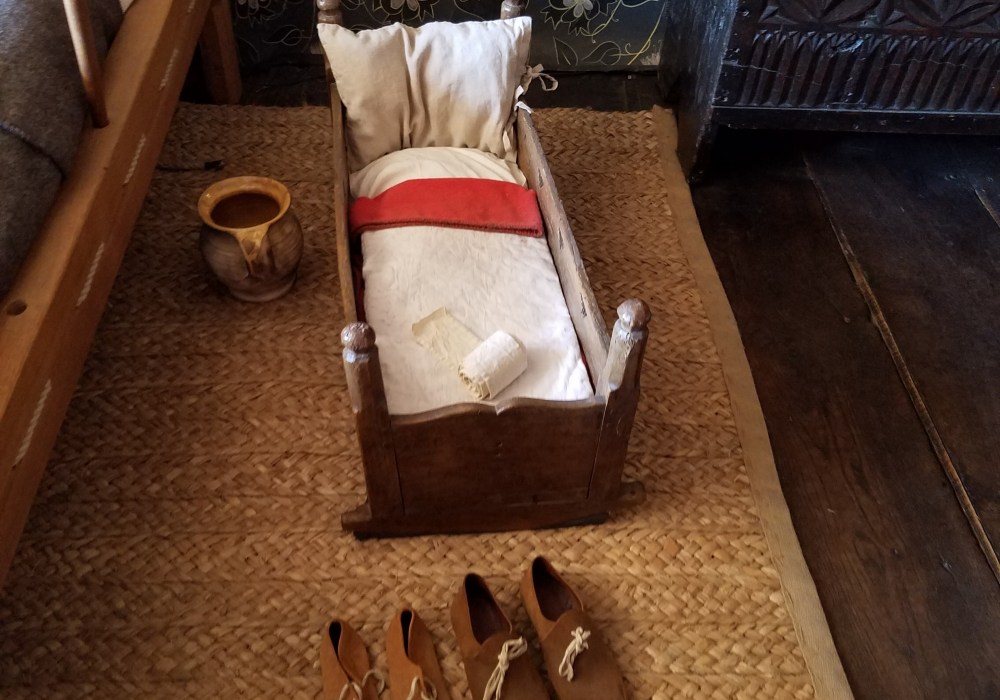
For many of the museums that had childhood material culture, shoes or cradles were the only items on view.
Four out of the 55 museums that I visited had children’s skeletal remains on display; usually infants and mostly with an adult skeletons nearby. Rarely did I see older children.
However, it was the toys that interested me the most; to see how the cherished play items were very similar to those of today.
I also observed how visiting children interacted with the exhibits, especially at museums not designed specifically for them. Some of these museums had created play areas pertaining to a display nearby.
Surprisingly, the British Motor Museum was a place that had children’s programs and school tours.
I think everyone enjoys seeing items from a childhood different from our own lives or from our own childhoods. It reminds us that across time and location, children were an integral part of the society.
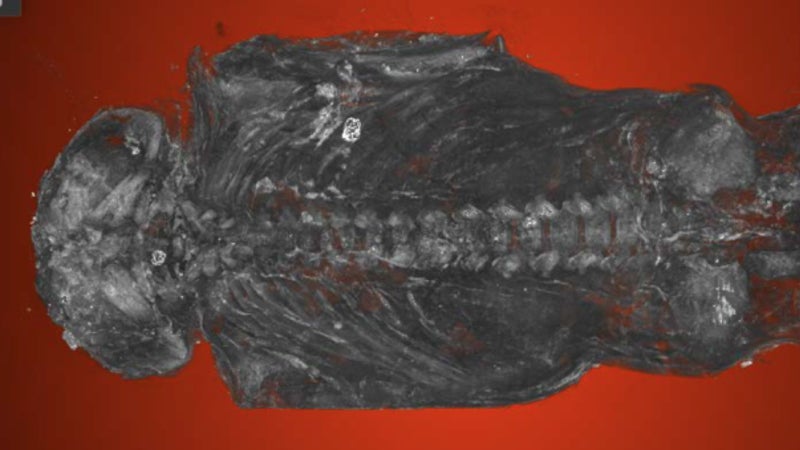
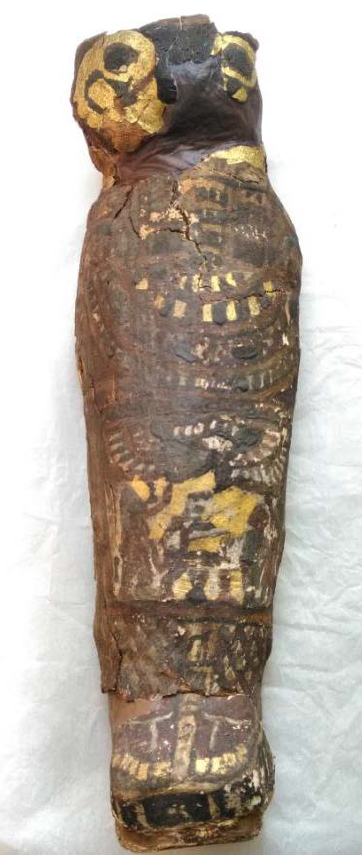
Recently researchers have made an unexpected discovery of a mummified foetus while CT scanning a 2300-year-old mummy known as Ta-Kush currently held at the Maidstone Museum in Kent. This coffin was labelled, “A mummified hawk with linen and cartonnage, Ptolemaic period (323 BC – 30 BC).”
Micro-CT scan shows the mummified stillborn human baby. Image: Maidstone Museum UK/Nikon Metrology UK
The high resolution CT scan results have recently been presented at the Extraordinary World Congress on Mummy Studies in the Canary Islands last month. The authors argue that the foetus was about 23-28 weeks gestation and had anencephaly as shown by underdeveloped skull bones.
To me, this begs the question as to whether the several other Egyptian ‘hawk’ mummies curated around the world are actually tiny babies. Further investigation of this baby and others will shed light on the social responses of grief and loss of those born too young to survive.
Watch here on YouTube Mummy ‘bird’ mystery

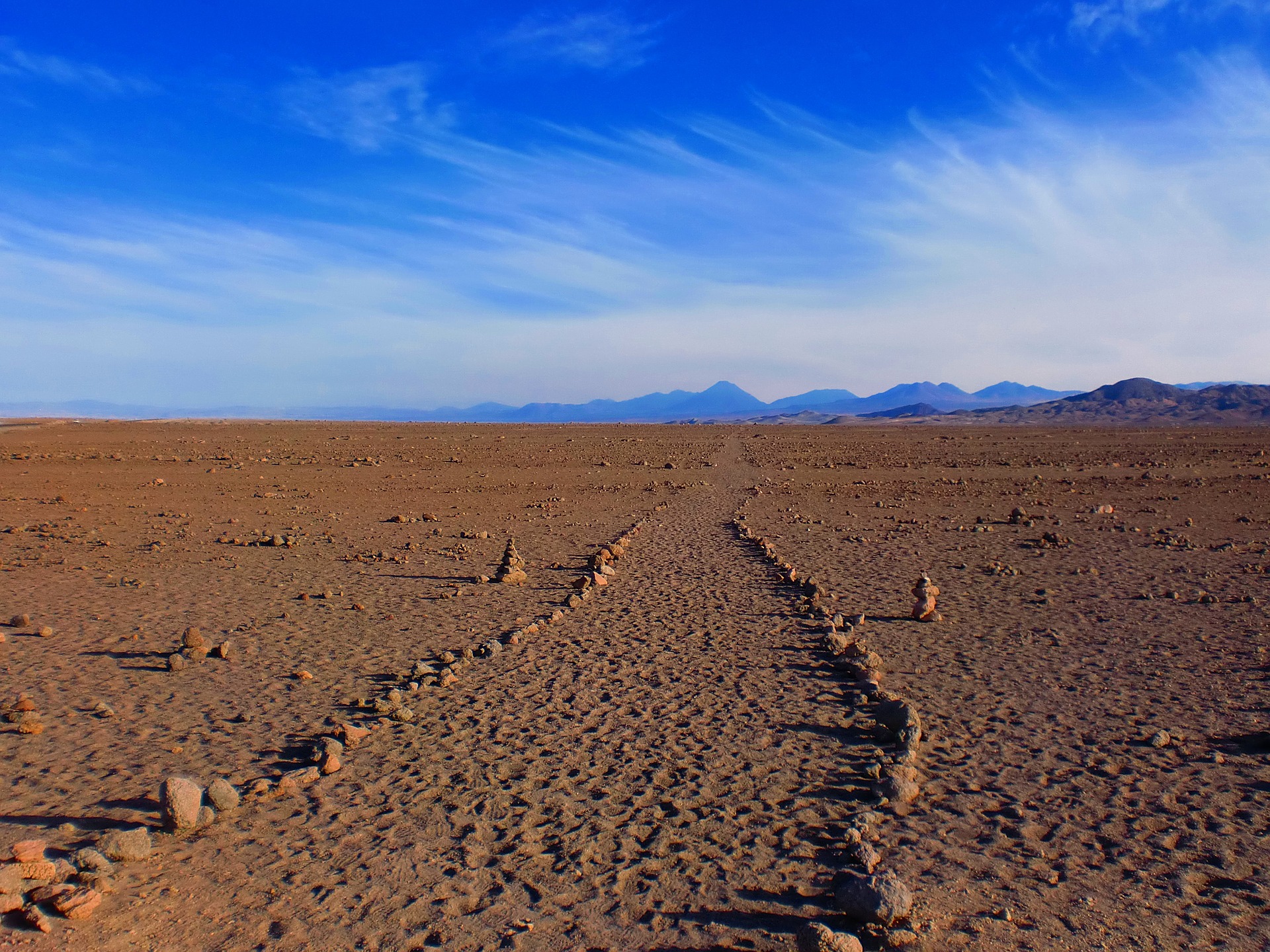
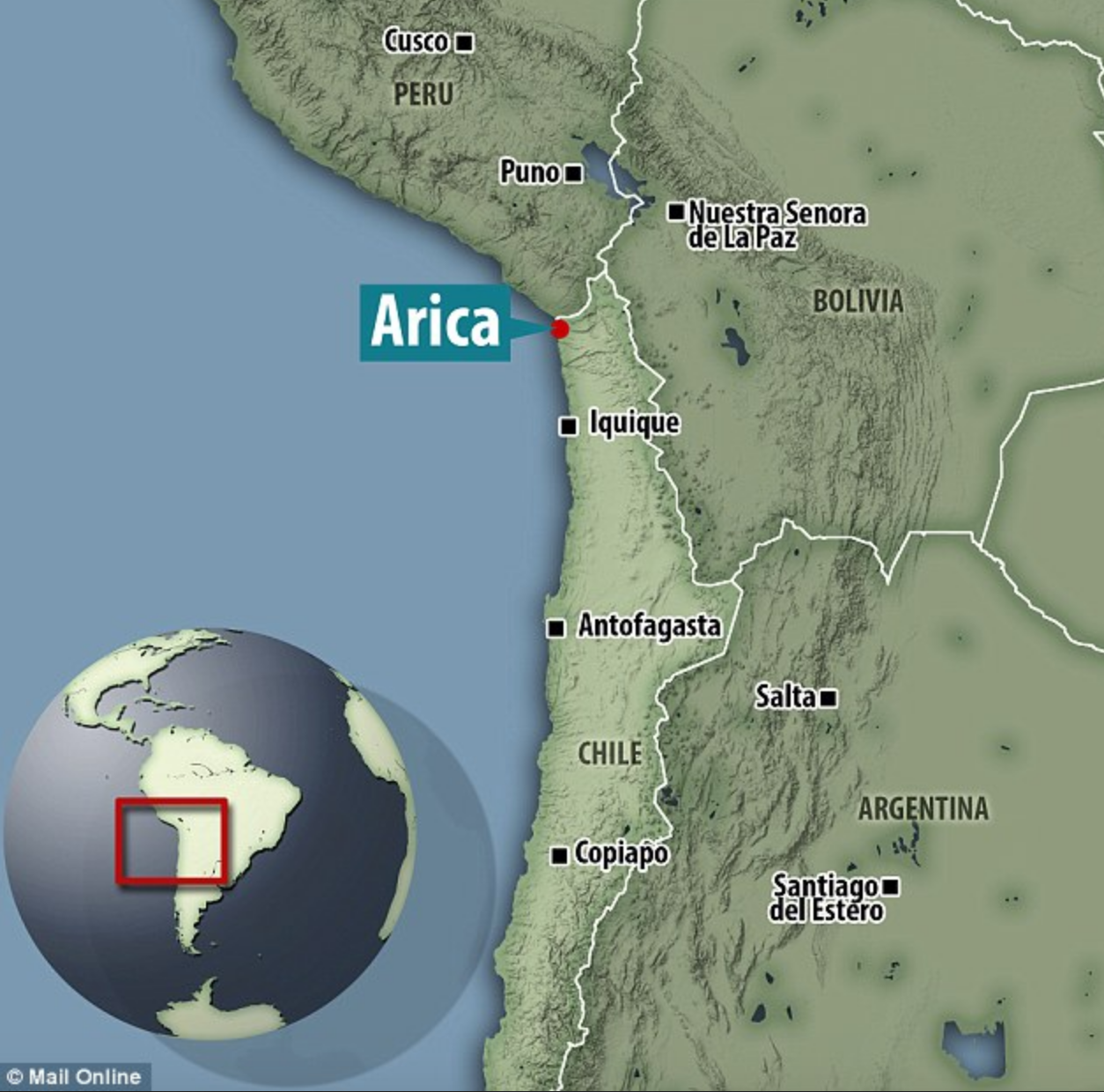
The Atacama Desert is well-known for the earliest evidence in the world for deliberate mummification of the dead, predating Egyptian mummies by more than two millennia. The intricate funerary rituals associated with the pre-agricultural Chinchorro people of this area were largely focused on infants and children. This has led some to hypothesise that it was a social response to high rates of foetal, infant and maternal death in these populations. Historically, archaeological research in the Atacama has focused on these pre-agricultural mummies, but recent research has highlighted periods of increasing infant mortality later in prehistory – during the transition to agriculture. The ultimate causes of this increase in stress, however, have eluded archaeologists.

The project took a two-pronged approach to this problem, studying changes to diet using chemical signatures in bones and teeth, and assessing their health impacts by looking for signs of pathology on the skeletons of early agricultural populations. Published recently in the International Journal of Paleopathology, and covered here, an Early Formative Period site just transitioning to agriculture (3,600-3,200 years before present) showed that all the infants have evidence of scurvy (nutritional vitamin C deficiency). Interestingly, so did an adult female found buried with her probable unborn child. First author Anne Marie Snoddy says “In addition to contributing to knowledge of the interplay between environment, diet, and health in the Ancient Atacama, this paper provides the first direct evidence of potential maternal-foetal transference of a nutritional deficiency in an archaeological sample”.
This study also used new methods for analysing diet and stress using the chemistry of bones and teeth, these also reveal a picture of early-life stress recently published in the American Journal of Physical Anthropology and covered by Forbes. “The preservation of mummies in the Atacama gives us an unprecedented opportunity to use tooth chemistry to look at prehistoric infant experience. We have chemical evidence of stress from tissues which form even before the infant is born, showing how the mother’s health is impacting her baby” says author Charlotte King. This work contributes to an understanding of the sensitive relationship between the health of the mother and infant in the past, including the maternal-infant transference of stress signals and micronutrient deficiencies.
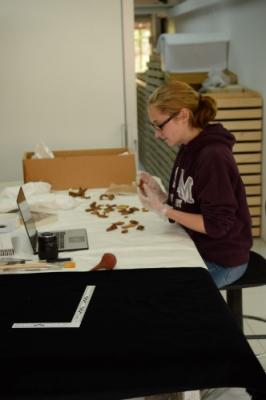
Anne Marie Snoddy doing her palaeopathological analyses in the Museo Universidad de Tarapacá San Miguel de Azapa, Arica, Chile.
The research is giving new insight into human adaptation to one of the harshest environments in the world. The Atacama Desert experiences less than 2 mm per year of rainfall, making agricultural resources very vulnerable. However, the marine environment is remarkably rich, owing to the upwelling of the cold Humboldt ocean current, resulting in an abundance of marine mammals and fish. Chemical analysis is showing that the people of the desert buffered themselves against the vulnerability of their agricultural resources by continued reliance on these marine foods. Even so, periodic food shortages from El-Niño events in the area were likely, and the skeletal evidence for vitamin C deficiency is interpreted as being related to these events.
A version of this story was originally published here.
This month we are featuring Dr Tracy Betsinger who is an Associate Professor from SUNY Oneonta. Prior to joining SUNY Oneonta, Dr. Betsinger held a post-doctoral research position with the Global History of Health Project at Ohio State University.

Tracy working on a perinate from the post-medieval Drawsko collection, Poland (while pregnant with a fetal skeleton shirt on!).
Tell me a little bit about your work:
I’m a bioarchaeologist interested in patterns of health (in general) and infectious disease, particularly treponemal disease, the effects of cultural factors such as status and urbanization on health, and the relationship between mortuary patterning/treatment and identity/personhood, especially among perinates. I work on materials from a variety of contexts, including prehistoric populations from eastern Tennessee and medieval and post-medieval populations from Poland.
How did you get into your field and why?
My interest in perinatal mortuary patterning was a fortuitous happenstance. While working with a colleague, Dr. Amy Scott, on post-medieval Polish materials, we noted the fairly large number of perinatal remains, many of which were well preserved (several with the tympanic rings in place!). We were examining other mortuary patterns at the time, when we decided to investigate the perinatal mortuary pattern to determine whether it matched older subadults or was distinct in some way. We also explored what this might mean in terms of their personhood and identity. The more I began to research perinates, perinatal mortuary patterns, and ontology, the more intrigued I became. I shared my research with a cultural anthropologist in my department (Dr. Sallie Han) whose research is focused on pregnancy and we found much common ground! The result of this was a four-fields anthropology of fetuses, initially an American Anthropological Association session and now a soon-to-be in-press edited volume.
What is on the future horizon for your research?
More recently, I have begun exploring perinatal mortuary treatment with the prehistoric populations from Tennessee. This work is just beginning, but I’m hoping to explore perinatal mortuary patterns/personhood temporally and geographically in the region and dovetail that information about what we know is going on health-wise in East Tennessee. My colleagues (Dr. Michaelyn Harle, Dr. Maria O. Smith) and I have only completed some general assessments of perinates, but so far, there seems to be a consistency in their treatment with older subadults and across time and space. We are planning more nuanced analyses of their mortuary treatment and are hoping to analyze remains for bacterial bioerosion with the hopes of identifying stillbirths from live births.
We have a forthcoming large annotated bibliography on the Bioarchaeology of Childhood coming soon to Oxford Bibliographies online. Take a sneak peek here. This will be useful to all bioarchaeology and human osteoarchaeology students, and academics for research and teaching. Please contact me here to request a personal copy.
Note that this is now published online
Halcrow, Siân E.; Ward, Stacey M. “Bioarchaeology of Childhood.” In Oxford Bibliographies in Childhood Studies. Ed. Heather Montgomery. New York: Oxford University Press, forthcoming.