Our new piece in The Conversation sheds light on how infant remains in medical museums were often acquired under troubling circumstances.
Many came from marginalised families — frequently without consent — shaped by inequality, stigma, and eugenic thinking that devalued certain lives while privileging their “scientific value.”
These histories force us to reflect on present-day responsibilities around care, display, and transparency in collections.
Some of the babies from by the medical school at the University of Otago were acquired from the Home of Compassion in Island Bay in Wellington. It was a home for foundlings who were abandoned, illegitimate, and disabled children. Home of Compassion Archives
How similar were Neanderthals to us, especially at the very beginning of life? Surprisingly, we’ve known very little about how Neanderthal babies grew before birth. That’s mainly because their remains are so rare in the archaeological record.
Now, new research is beginning to fill in that gap.
This has taken a closer look literally at the microscopic level of the bones and teeth of three Neanderthal babies. These infants were discovered in the 1960s and 70s at a famous archaeological site called Sesselfelsgrotte in southeastern Germany. The remains date back between 90,000 and 50,000 years.
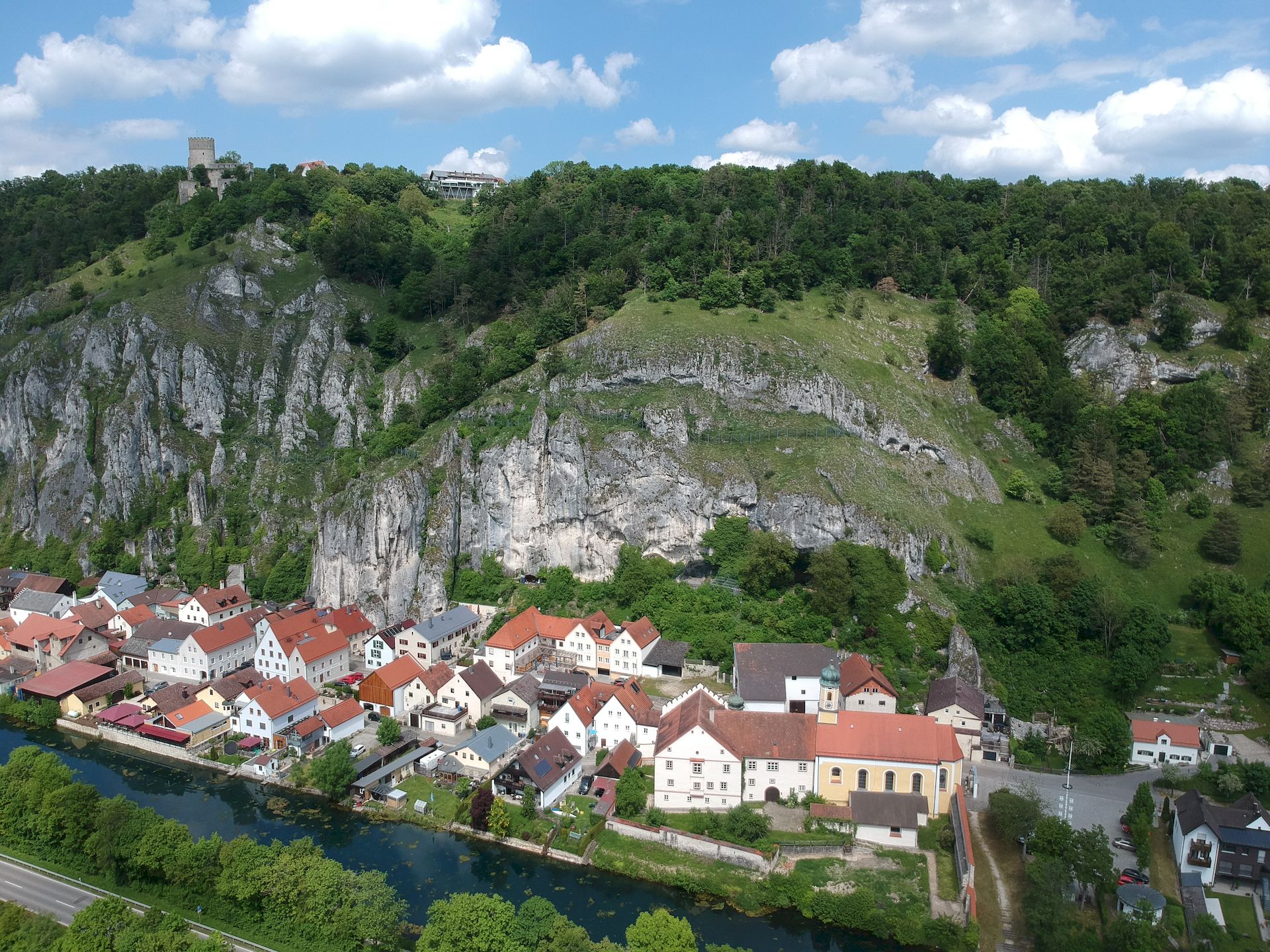
The site of Sesselfelsgrotte, where the cave opening can be seen just behind the large trees above the line of house roofs.
A rare glimpse into Neanderthal infancy
Sesselfelsgrotte is one of the richest Neanderthal sites in western Europe, and what makes it especially remarkable is that it includes the remains of three babies. Finds like this are incredibly rare, making them valuable for understanding early development.
To study the babies without damaging the fragile bones, researchers used advanced micro-CT scanning, a kind of high-resolution 3D imaging. This allowed them to examine both bone structure and teeth in extraordinary detail, and to compare what they saw with how modern human babies develop.
Just like us
What did they find? In many ways, Neanderthal babies developed in broadly similar ways to modern human babies. The microscopic structure of their bones showed clear signs of rapid growth in the later stages of pregnancy.
This adds to growing evidence that Neanderthals and modern humans were closely related, which highlights our shared evolutionary history in a very tangible way.
A surprising clue about ancient health
Inside the teeth, the researchers noticed abnormalities in the dentine—the layer beneath the enamel. These irregularities may point to some kind of metabolic stress during development.
This could represent the earliest evidence of metabolic disease ever found in Neanderthals, dating back around 75,000 years.
New research using microscopic analysis of teeth has uncovered striking evidence of high physiological stress in children at the archaeological site of Hisban in Jordan (figure 1). The findings point to a strong link between childhood health and maternal well-being in the past.
At Hisban, researchers identified unusually high mortality rates among children under the age of two. Many of these young individuals showed signs of conditions such as scurvy and rickets—diseases often associated with poor nutrition, chronic infection, and poor maternal health. The authors suggest that these patterns may reflect broader political and economic changes in the region, including influences from the Ottoman Empire.
To investigate this further, the study examined microstructural markers of stress preserved in teeth. Teeth form in early life and record developmental disruptions in remarkable detail. One key feature studied was accentuated enamel lines—darkened, widened growth lines in the enamel, the hard outer surface of the tooth. These lines form when enamel production is interrupted, often due to physiological stress during infancy or childhood.
Figure 1: Location of Hisban and the room that contained the Late Ottoman burials (black square on inset) (figure from Cockerille et al. 2026)
They also analysed interglobular dentin, a defect found within the dentin—the inner layer of the tooth. This condition occurs when mineralisation is incomplete, leaving small unmineralised areas. Interglobular dentin is often linked to vitamin D deficiency and is commonly associated with rickets, although it is not exclusively diagnostic of the disease.
Because teeth develop in stages, these features can be matched to specific periods in early life. This allows bioarchaeologists to pinpoint when stress events occurred and better understand the timing and possible causes of health disruptions.
Accentuated enamel lines were found in all individuals studied, with notable peaks occurring at around 10 weeks of age and again between 15 and 24 weeks. In addition, more than 60% of individuals showed interglobular dentin defects, which formed from the prenatal period through to about eight years of age.
Taken together, these findings suggest a population experiencing significant and repeated stress during early life. The authors argue that these patterns likely reflect a complex interplay of factors, including poor maternal health, nutritional deficiencies, and disease. The study highlights how closely maternal and infant health were linked—and how broader social and environmental pressures may have shaped this interaction.
Cockerille, K., A.Propst, B.Kahlon, D.Temple, and M.Perry. 2026. “Microstructural Evidence for Early Childhood Stress in a Community in Transition at Hisban, Jordan.” American Journal of Biological Anthropology190, no. 2: e70292. https://doi.org/10.1002/ajpa.70292.